
The Studio as a Living Archive
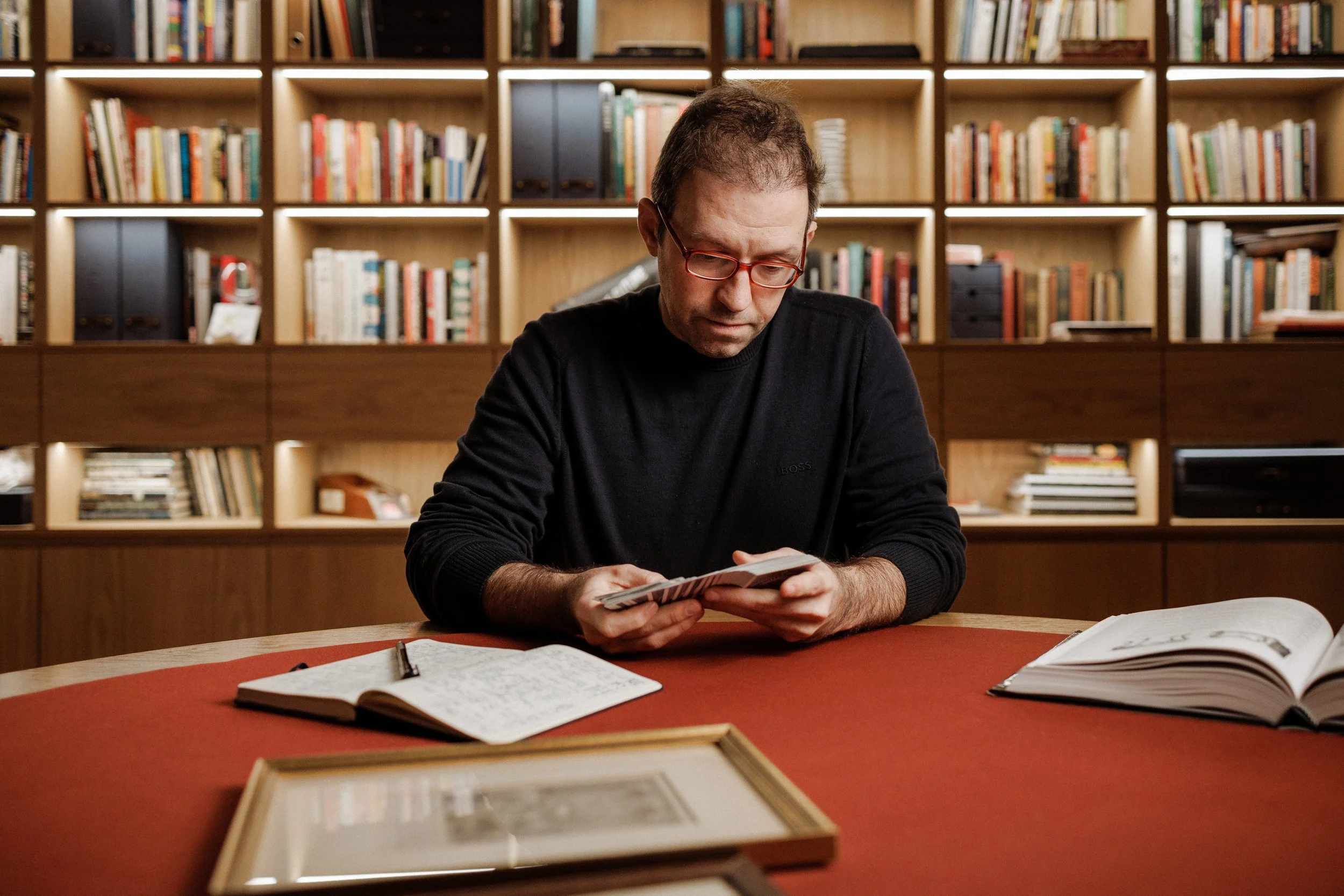
When people hear archive, they imagine boxes. Paper. Dust. Gloves. A quiet room where the past is preserved like a pressed flower. But the kind of archive I’m building in the studio is different. It’s alive. Because magic is not in the objects. It’s gesture, timing, breath. The angle of a wrist. The pause that makes an audience lean forward. These things don’t live well on a shelf. They live in bodies, in repetition, in the invisible transmission between performer and guest.
That’s what I mean by a living archive: a place where the tradition survives not as a museum, but as practice. I might be biased, but Porto feels like the right home for this. The city is already an archive you can walk through: trade, craft, literature, and rumor stacked into stone. But, above this, Porto is also stubbornly present. It’s not a theme park but a living city that keeps editing itself.
The studio borrows that energy. Some nights, the room is bright and loud. Some nights it’s intimate and quiet. The same pieces of repertoire land differently because each audience is unique, because the city outside is different, and because each day I am different. That variability isn’t a flaw. It’s the point.
A static archive preserves artifacts. A living archive preserves relationships. There’s a strange comfort in that, especially now. We’re surrounded by perfectly stored digital memories that somehow feel thin. Photos that don’t smell like the night. Videos that don’t carry the room’s temperature. A live performance gives you a different kind of record: it stores itself in your nervous system. It becomes the sort of memory that returns at odd moments: in a café, walking home, when you’re hearing a story. Like a secret you didn’t know you’d kept.
I take this seriously. Not solemnly, but seriously. Because when you buy a ticket, you’re buying time inside an archive while it’s still warm. If you like Porto because it feels like a hidden gem, you’ll understand this immediately. The studio isn’t trying to be everywhere. It’s trying to be here, properly. And quietly, it keeps editing itself with every new performance.
If you want to step inside the archive while it’s alive, reserve a seat at the Time for Magic studio performance in Porto.