
Who Cuts the Deck
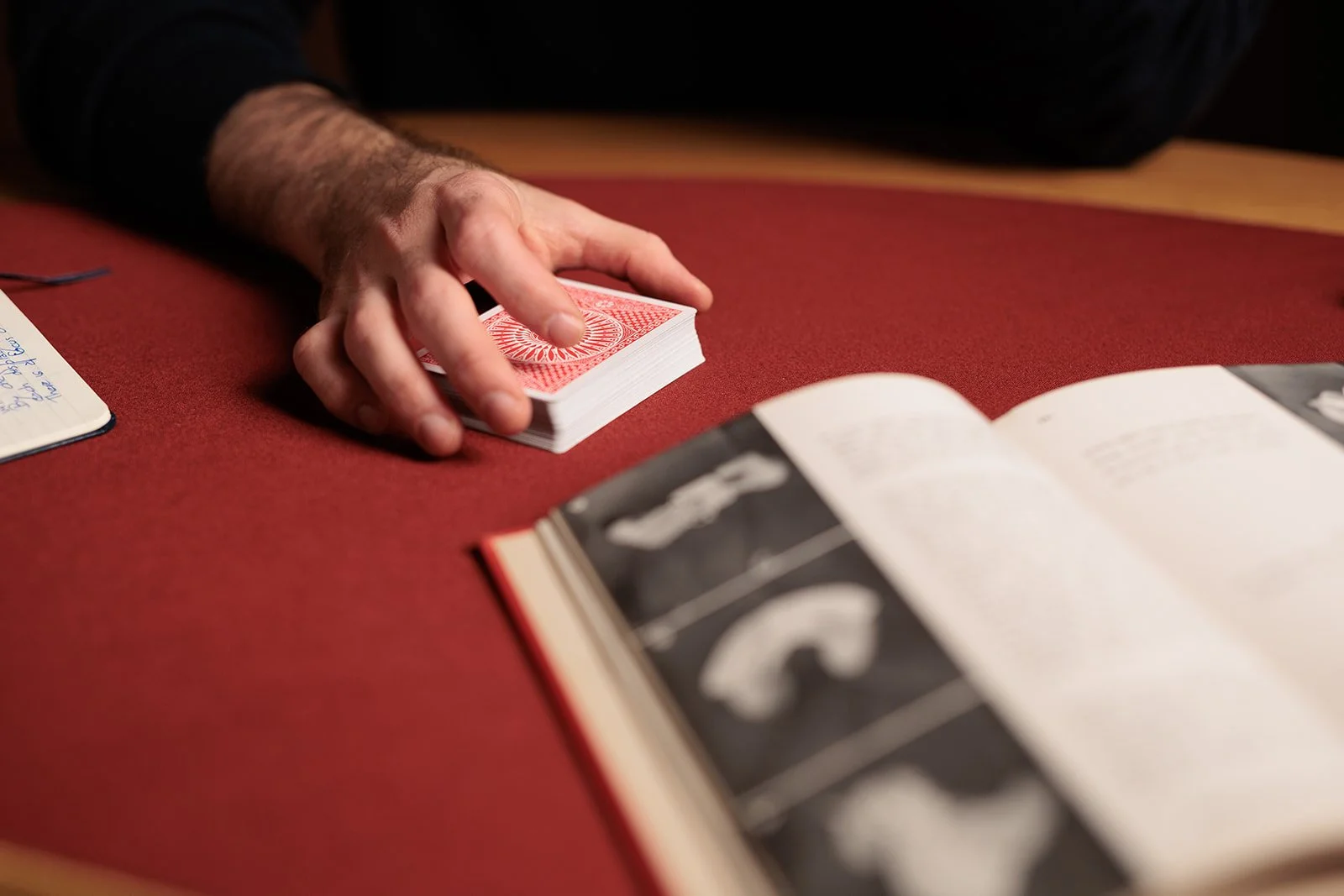
There’s a moment I love in any Portuguese card table game. Especially around Porto, where people take small rules seriously without admitting they do. It’s the moment someone asks, “Who cuts?” On paper, cutting is a simple task. In the player’s body, cutting is ethical. It says: “We are making this fair.” It also implies that friendly trust is left out of the card table.
That’s the quiet genius of card traditions. They’re miniature legal systems built for humans who don’t like feeling foolish. A cut is a social tool: it lowers suspicion, distributes responsibility, and gives everyone permission to relax. The deck becomes neutral, “clean,” not owned by a single set of hands on the table. Without surveillance cameras in casinos or regulations in place, this is how players feel safe.
And yet, of course, the paradox remains: the cut is, in essence, a performance. It doesn’t guarantee fairness. Which is exactly how much of modern life works: passwords, receipts, verification steps, a checkbox that says “I am not a robot.” They’re rituals that confer legitimacy, allowing cooperation to continue without question. The feeling surpasses the reason, and that’s what we often care about: not the real results but our perceived notion of them.
This is why I’m fond of house rules. House rules reveal what a group fears. If a table insists on strict cutting, it’s a table that’s seen enough games to know how quickly trust can sour. If the table is casual, it’s either deeply trusting or not playing for high stakes. In Sueca and Bisca, typical Portuguese card games passed down orally with regional variations, the rituals around dealing, cutting, and declaring trumps are part of the culture, not just the rules.
One of those rituals is simply tapping the deck as a symbol of cutting. Meaning the deck is not changing order, per the player's decision. I often wonder whether this tap symbolizes full trust or signals that the player knows the game's fairness is just an illusion. Perhaps, an illusion he is creating with the help of some confederate.
Knowing what is possible with a deck of cards makes me suspicious of any game, even the ones where the stakes don’t matter. Advice: If you want to be perceived as fair, always cut the deck. Even if it’s more of an illusion than anything else.
If you want a night where uncertainty is handled with care, reserve a seat at the Time for Magic studio performance in Porto.