
A Note in the Margin That Felt Like a Message
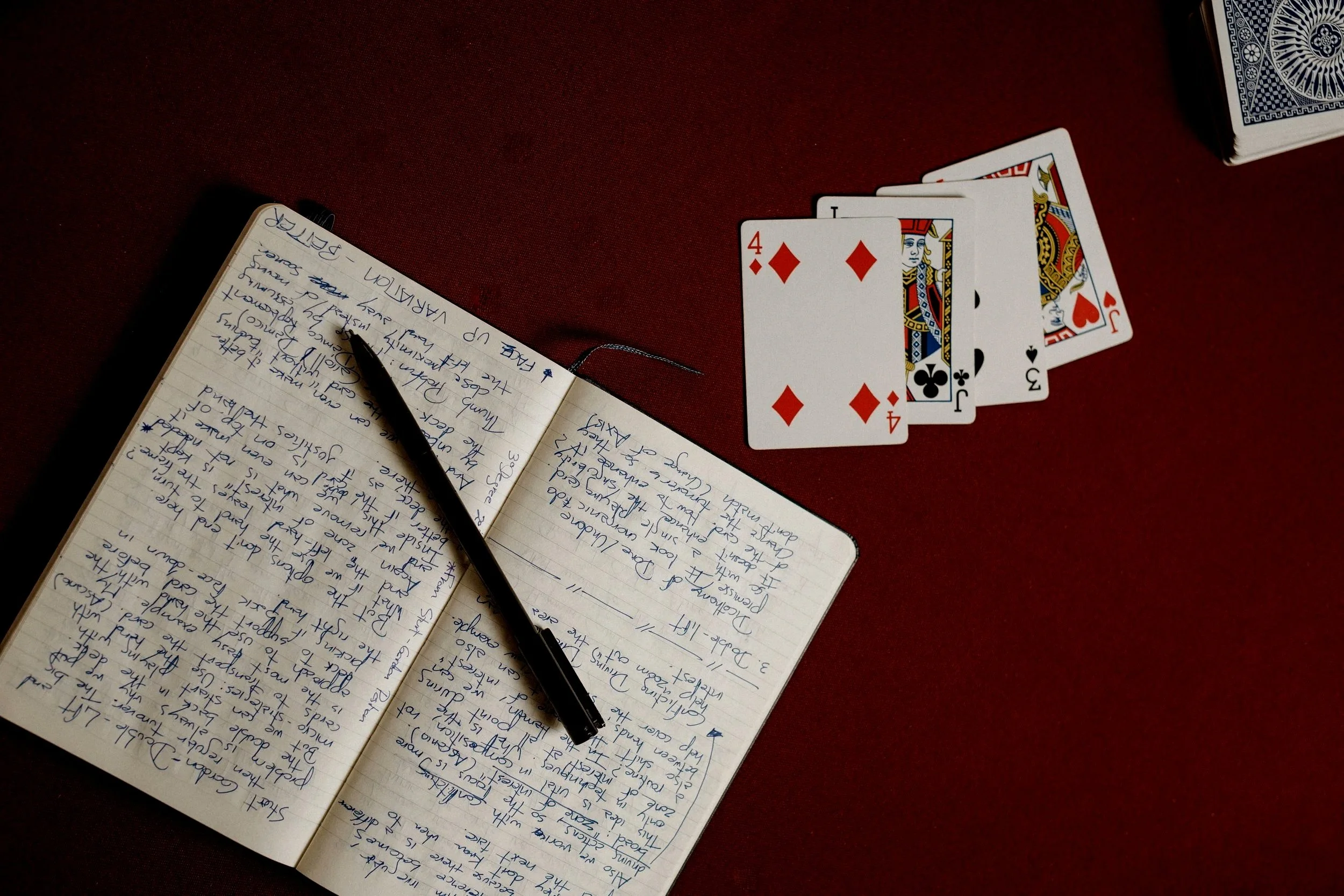
I have a weakness for other people’s handwriting. Not because I’m curious (I am, but politely), but because handwriting is evidence of a mind at work in real time. It’s a thought leaving its footprints. One of my favorite experiences is finding a book that has been lived with. Something you pick up in a market, or a secondhand shop, and inside the margin there’s a note. A correction. A disagreement. A tiny private joke. And suddenly the book becomes two books: the author’s and the reader’s.
That’s called marginalia: a hidden conversation conducted in public ink. It’s also a lesson in intimacy. A margin is the perfect hiding place because it looks like background, something that is there but not central. Your eyes may glide past it, unless you’re the kind of person who reads slowly enough to notice what’s whispering around the action.
Magic uses the same principle. The best hiding place isn’t darkness, and it’s not being out of frame, but the margin of your attention. Not because you’re careless, but because you’re human. You prioritize the obvious story, and the periphery becomes “safe to ignore.” That safety helps me craft impossible narratives.
And here’s the modern scaling that matters: we are living in a world where margins are being monetized. Sidebars, notifications, “recommended for you.” The periphery has become a battlefield, and everyone wants access to your attention in every possible way. So I love finding a margin that isn’t trying to sell me anything. A handwritten note that exists purely as a record of someone’s curiosity.
Inside the studio, we crave those findings so we can incorporate them into it. We want it to be a place where the margins are gentle again. Where the periphery is part of the poetry, only visible to those who care to see it.
If you enjoy hidden messages in plain sight, reserve a seat at the Time for Magic studio performance in Porto.